Home < News < Complete Guide to Seismic Isolator Performance: Properties, Stiffness, and Load Capacity
Seismic isolators are the core component of modern earthquake protection systems, serving as the critical interface that protects buildings and bridges from seismic damage. Understanding their mechanical properties is essential for structural engineers, construction professionals, and procurement specialists working on earthquake-resistant projects in regions like the Philippines.
This technical guide examines the key performance characteristics of seismic isolators, specifically laminated rubber bearings, including vertical properties, stiffness factors, deformation behavior, and ultimate load capacity, based on established engineering principles and test data.
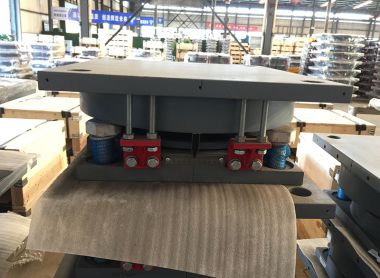
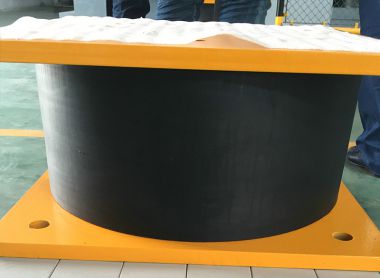
Seismic isolators, particularly laminated rubber bearings, consist of alternating layers of rubber and steel plates, creating a composite structure that combines vertical stiffness with horizontal flexibility. The performance of these seismic isolation bearings is evaluated through several key properties:
Vertical performance: Including stiffness, deformation, and load capacity
Horizontal performance: Relating to shear deformation and energy dissipation
Damping characteristics: Ability to absorb seismic energy
Durability and fire resistance: Long-term performance under service conditions
For engineers specifying seismic isolators in the Philippines, understanding these properties ensures proper selection for specific project requirements.
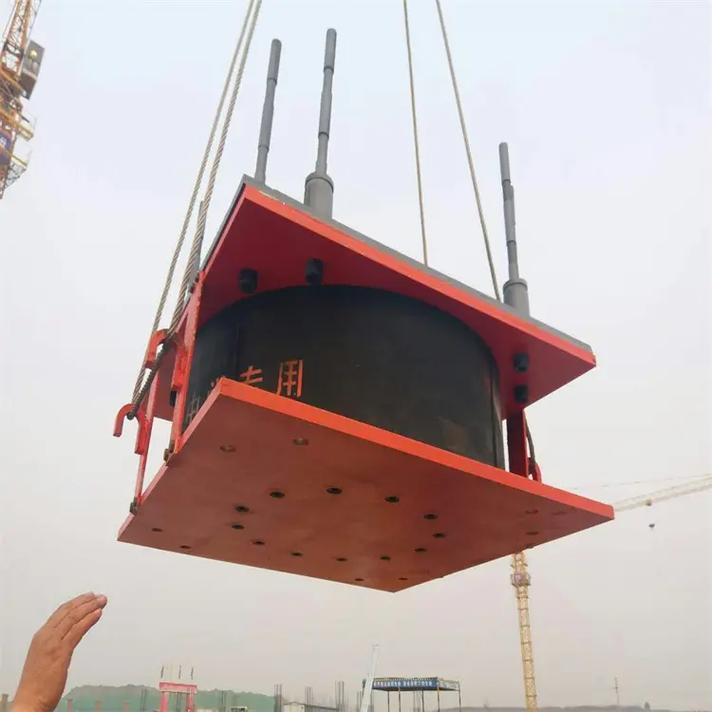
The vertical performance of seismic isolators encompasses three critical parameters: vertical stiffness, vertical deformation, and ultimate compressive capacity.
Under axial compression, the rubber layers in a seismic isolator compress while the steel reinforcing plates control the deformation. The steel plates have significantly higher modulus than rubber, meaning they control the load transfer mechanism under vertical pressure.
the stress distribution in a seismic isolator under axial load.
The multi-layer rubber compresses
Rubber layers flatten and expand laterally
Steel plates restrain lateral expansion, creating confining pressure
This confinement significantly increases the seismic isolator's vertical stiffness
Under higher axial loads, rubber layers experience more pronounced lateral deformation, which affects the overall stress distribution pattern.
Several key factors influence the vertical stiffness of seismic isolators:
Rubber hardness directly affects shear strength and compressive behavior. Higher hardness typically increases stiffness but may reduce flexibility.
The relationship between axial pressure and deformation is direct: higher vertical pressure produces greater seismic isolator deformation. This relationship is not perfectly linear, as rubber exhibits nonlinear behavior under significant compression.
The shape factor (S) is one of the most important design parameters for seismic isolators
The relationship between vertical stiffness and shape factor follows this pattern:
Higher shape factors → Increased vertical stiffness
Lower shape factors → Reduced vertical stiffness but greater flexibility
As vertical stiffness increases, the effective compression area may decrease, which can actually reduce the compression stiffness.
Testing data shows that the initial axial stiffness is typically 1/5 to 1/10 of the compression stiffness under sustained load. This difference reflects the complex stress distribution within the layered rubber-steel composite.
The elastic behavior can be expressed through:
Poisson's ratio for rubber under confined conditions approaches 0.5, reflecting its nearly incompressible nature when confined by steel plates.
how the elastic modulus of seismic isolators changes under different conditions. Test measurements indicate that modulus values vary with:
This variation must be considered in seismic design, where seismic isolators experience dynamic loading during earthquake events.
3. Ultimate Vertical Compressive Capacity
The ultimate vertical compressive capacity is defined as the maximum axial stress a seismic isolator can sustain without shear deformation. This capacity depends primarily on:
Rubber layer thickness: Thicker layers provide more deformation capacity
Steel plate properties: Yield strength and thickness of internal plates
First shape factor: Typically ranging from 5 to 8 for properly designed seismic isolators
Testing shows that when seismic isolators with a shape factor S=18 are loaded to a height of 1.2m, the following failure sequence occurs:
Initial yielding at the bearing edges
Progressive plastic deformation with continued loading
Rubber ring failure - The confining effect of the rubber ring is lost
Loss of constraint on rubber layers
Rubber layer failure and sudden deformation release
For Philippine engineering applications, understanding ultimate capacity ensures:
Adequate safety margins under maximum considered earthquake loads
Proper seismic isolator sizing for specific building weights
Compliance with NSCP requirements for seismic isolation systems
·
Designers must verify that the seismic isolator's ultimate capacity exceeds the maximum expected loads by an appropriate safety factor.
When selecting seismic isolators for projects in the Philippines, engineers should evaluate:
The primary shape factor for individual rubber layers:
Typical range: 5 to 15
Higher values increase vertical stiffness
Must balance stiffness with required isolation performance
·
Related to overall seismic isolator stability:
Ratio of bearing diameter to total rubber thickness
Affects buckling stability under large displacements
Parameter | Typical Range | Design Impact |
First Shape Factor (S₁) | 5 - 15 | Controls vertical stiffness |
Vertical Stiffness (K_v) | 500 - 3000 kN/mm | Determines building period |
Ultimate Compressive Stress | 10 - 30 MPa | Safety under maximum load |
Initial/Compression Stiffness Ratio | 0.1 - 0.2 | Affects low-strain behavior |
Poisson's Ratio (ν) | ~0.5 (confined) | Nearly incompressible |
The performance of seismic isolators depends on careful consideration of material properties, geometric factors, and load conditions. For earthquake-resistant construction in the Philippines, understanding these parameters ensures that seismic isolation bearings provide reliable protection throughout their service life.
Engineers must evaluate vertical stiffness, deformation capacity, and ultimate load resistance when specifying seismic isolators for bridges, hospitals, and critical infrastructure. Proper selection based on these technical factors, combined with quality manufacturing and installation, creates structures that can withstand the strongest earthquakes while remaining fully functional.
For specific project applications, consultation with seismic isolator manufacturers and seismic design specialists is recommended to optimize selection for local conditions and requirements.