Home < News < Seismic Isolation Design in the Philippines: Code Gaps, Project Evidence, and What Designers Actually Rely On
If you are designing a seismically isolated hospital in Manila, you will eventually open NSCP 2015 and confront a fact that every Philippine designer faces sooner or later: the Philippines currently has no dedicated building seismic isolation code. A 2026 study states this gap plainly—designers typically start from the ISO 23618 isolation benchmark model and then modify it to comply with NSCP minimum requirements. This is not a secret. But it means that every bearing parameter you select in a project lacks a local text that tells you, clause by clause, “take this λ factor, run this upper and lower bound.”
This has shaped a distinctive decision-making habit among Philippine designers: when the code cannot provide certainty, that certainty must be recovered from somewhere else. In bridges, there is a relatively clear anchor. In buildings, designers rely more on the real-world performance of completed projects and traceable test evidence. Understanding this alternative path is more useful than debating what the code “should” say.
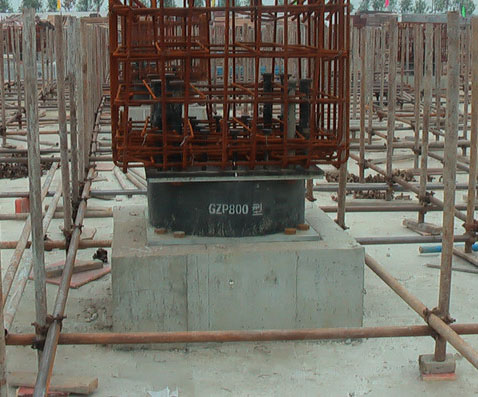
NSCP 2015’s seismic framework is complete in itself: buildings are classified into five categories, the minimum return period for basic seismic analysis is 475 years, and site and near-fault coefficients are clearly defined. The problem is that these provisions were written for fixed-base structures. Once you introduce an isolation layer, there is no local clause that directly tells you how bilinear hysteresis parameters should map onto the NSCP response spectrum framework, or how design displacement should be aligned with the 475-year and 2475-year levels.
In practice, designers borrow from three layers. The first is the ISO 23618 benchmark model, which provides a standard framework and parameter definitions for isolated building analysis. The second is NSCP minimum requirements, used to calibrate seismic hazard levels, importance factors, and drift limits. The third—and most underrated—layer is the Philippines’ own completed projects. The five-story building at the San Lazaro Hospital campus was the country’s first hospital project to use seismic isolation bearings. Its significance is not the “first” label, but the fact that it gives later designers a domestic reference that can be examined within the NSCP framework: bearing type, layout logic, isolation-layer detailing, and—most importantly—which parameter choices survived review when no dedicated clause existed. Other isolation projects, including De La Salle University and the Bangko Sentral ng Pilipinas Cebu and Davao branches, together form a de facto “precedent library.”
DPWH and ASEP are already advancing the development of Philippine isolation technical standards, and the revision of NSCP’s 7th edition is underway. But until those texts are in force, citing a completed, verifiable Philippine isolation project as support for parameter selection remains one of the most practical compliance paths available to designers.
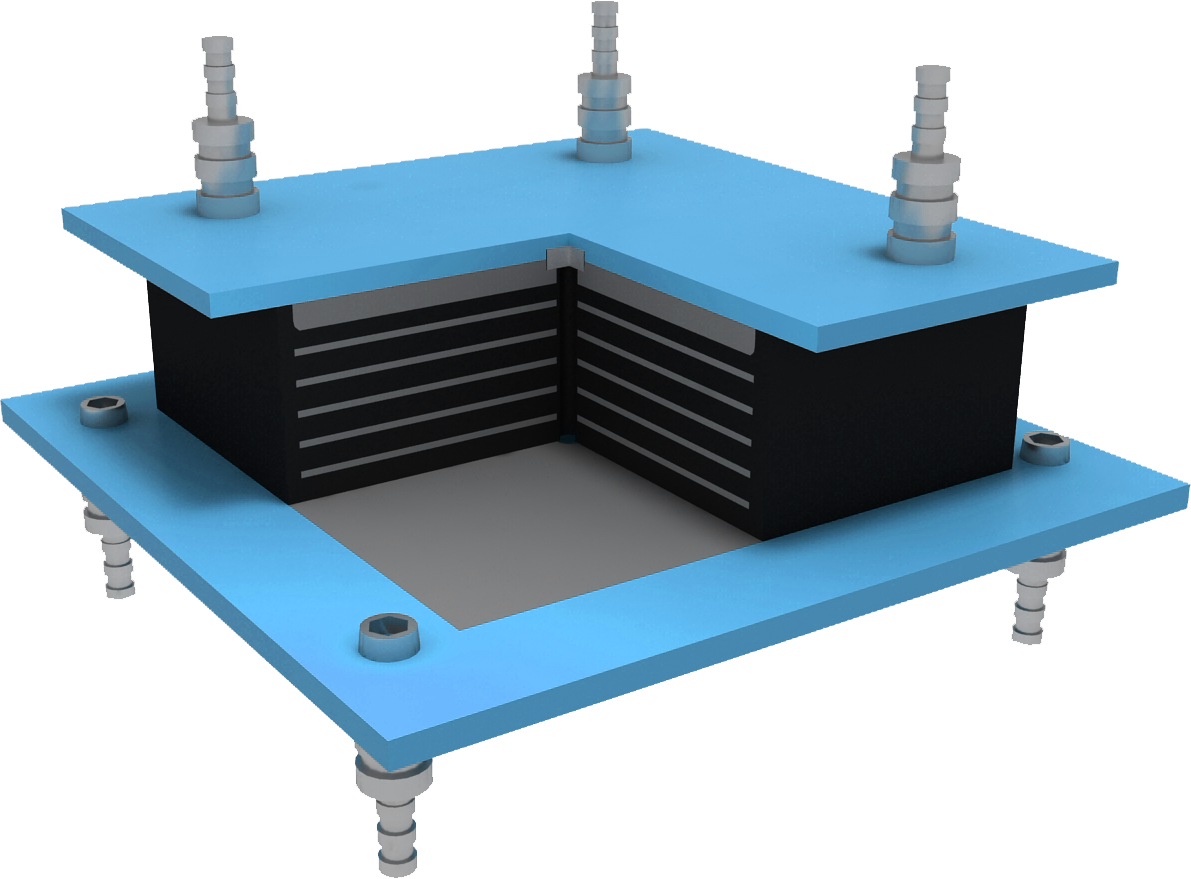
Philippine bridge designers are luckier than their building counterparts on the isolation question. DPWH’s Highway Bridge Seismic Isolation Design Specifications is a clearly existing technical document, used alongside the LRFD bridge seismic design specifications. This guideline imposes two conditions that directly shape design behavior.
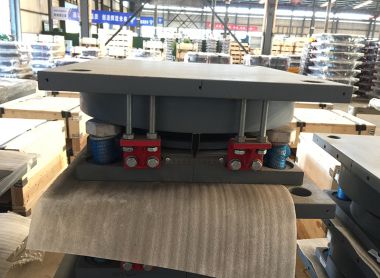
The first is “verified performance and simple mechanism.” The guideline requires that isolation bearings be selected within acceptable mechanical behavior ranges and reliably fixed to the superstructure and substructure with anchor bolts. The second condition is more noteworthy: the bearing must be “capable of replacement.” Replaceability is not a recommendation—it is a code requirement. This means that when selecting a bearing, bridge designers cannot stop at bilinear parameters. They must also ask: does this bearing’s installation detail allow it to be jacked up, removed, and replaced at some future point without cutting the main girder or rebuilding the pier cap?
This requirement is directly tied to actual Philippine bridge conditions. The Calamaniog Bridge in Cagayan is a long-span cable-stayed bridge that uses a special support system including seismic isolation bearings to resist strong earthquakes. For structures of this type, replaceability must be considered from the construction-drawing stage together with pier-top detailing, jacking space, and temporary support schemes. DPWH’s guideline turns this into mandatory language, and designers’ search behavior consequently lands on specific detailing questions rather than remaining at the level of “LRB versus HDRB” type comparison.
On June 8, 2026, an Mw 7.8 earthquake struck offshore Mindanao. General Santos City reported PHIVOLCS Intensity VIII (“destructive”), with more than 2,000 aftershocks, the strongest at Mw 6.4. Forty-seven people died, 688 were injured, and more than 340,000 were displaced. Medina Hospital—First Misamis Oriental General Hospital—is a six-story hospital expansion with a basement, and it uses an LRB isolation system. After the earthquake, the main structure was essentially undamaged and maintained its structural integrity.
The value of these facts to designers is not the promotional narrative that “a certain supplier’s product survived the test.” Their value lies in providing a performance data point under real Philippine ground motion that can be used for comparative analysis. When your project needs to justify the reliability of a bearing system in the absence of NSCP isolation clauses, a Philippine hospital case that experienced Intensity VIII shaking with an essentially undamaged main structure responds more directly to the question a reviewer is likely to ask than any theoretical derivation: how did this system actually perform here, under this earthquake?
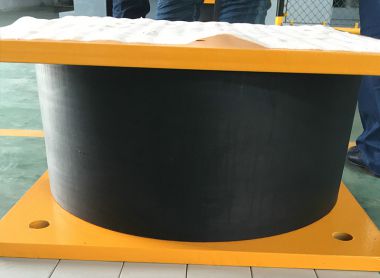
Medina Hospital is not an isolated case. Critical facilities such as the National Kidney and Transplant Institute have also adopted LRB or FPB isolation systems, with reported reductions in seismic acceleration transmission of 75% to 87%. The existence of these projects means that Philippine building isolation design has formed a verification ecosystem that does not depend entirely on code text: precedent projects provide parameter references, real earthquakes provide performance evidence, and designers build the argument chain for their own projects between the two.
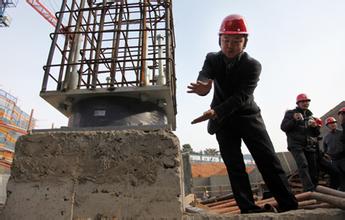
Whether for buildings or bridges, once the analysis is complete and the parameters are fixed, Philippine designers face a judgment that code text cannot replace: does this supplier’s bearing, physically, deliver the bilinear envelope written into the calculation report?
The sources of isolation bearings in the Philippine market are diverse—international manufacturers, Chinese makers, and local suppliers coexist. The selection checklist given by market guidance is blunt: products must meet the mandatory requirements of Philippine seismic codes, suppliers should have local technical support capability, and test reports and quality certificates must be requested and reviewed. The ISO 22762 series remains the core international reference for elastomeric isolation bearing testing, while the prototype-testing logic of ASCE 7 and AASHTO—design must be based on prototype bearing test results—is indirectly introduced into Philippine bridge practice through the DPWH guideline framework.
For designers, an actionable verification path does not need to be reinvented: first, confirm whether the supplier can provide completed Philippine project records with Q_d, K_d, and design displacement envelopes close to yours; then require prototype testing to cover the maximum displacement and vertical load combination in your design; finally, confirm whether the bearing detail satisfies the replaceability condition required by the DPWH bridge guideline (for bridge projects). These three steps do not replace structural analysis, but they determine whether your analysis results can be delivered on site and over decades of service.
If you are preparing technical specifications for seismic isolation bearings in a Philippine building or bridge project, and need parameter records from completed projects such as San Lazaro or Medina Hospital, or a checklist for replaceability detailing and prototype testing under the DPWH bridge seismic isolation guideline, you can request our Philippine project technical file directly.