Home < News < Friction Pendulum Bearings (FPB) for Highway Tunnels: Advanced Seismic Isolation, Cost Control, and the Patented Wind-Resistant Upgrade
What is a friction pendulum bearing? A friction pendulum bearing (FPB) is a seismic isolation device that utilizes a spherical sliding surface to dissipate earthquake energy and automatically re-center a structure through gravity. While LRBs (lead rubber bearings) are a common industry standard, FPBs offer superior self-centering capability and longer service life under high-axial-load conditions. However, selecting the right FPB for elongated highway tunnels and bridge structures requires balancing directional stiffness, wind vulnerability, and procurement budgets – a challenge that our patented integrated solution directly addresses.
With years of proven application in major infrastructure projects across seismic-prone zones, we understand that effective seismic isolation is not just about peak performance during earthquakes – it is also about cost-efficient design and minimizing reliance on expensive auxiliary systems.
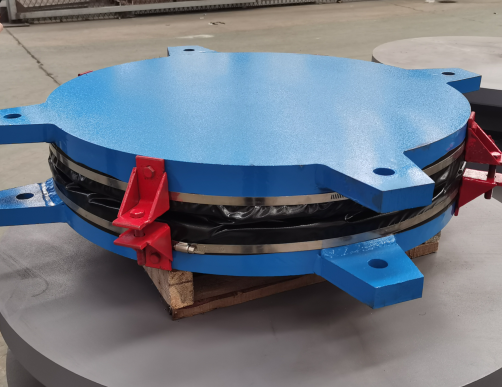
1. Conventional Isotropic FPBs – Excellent for Buildings, Inefficient for Bridges
Standard friction pendulum bearings feature a spherical concave surface that behaves identically in all horizontal directions (isotropic motion). This makes them highly suitable for square-plan buildings, where seismic forces can arrive from any angle.
However, highway tunnels and bridge decks are inherently long and narrow – their longitudinal and transverse stiffness, mass distribution, and seismic demands differ significantly. Specifying an isotropic FPB for such asymmetric structures forces over-engineering in the weaker-demand direction, unnecessarily inflating material and fabrication costs. A smarter approach is to customize the bearing's curvature along each axis, delivering targeted seismic isolation performance only where it is truly needed – reducing overall project expenses without compromising safety.
2. XY-Type Asymmetric FPBs – Simple Structure, but Costly Materials
The XY-type (elliptical) friction pendulum bearing was developed to address directional mismatches, using different radii of curvature for longitudinal and transverse movements. Its structural concept is straightforward, and it allows independent tuning of the isolation frequency in each axis.
Yet this design simplicity is deceptive: achieving the required friction coefficient and wear resistance with asymmetric geometry demands specialized, high-grade alloys and polymers that are substantially more expensive than those used in standard FPBs. Furthermore, even with directional tuning, XY bearings still suffer from the same fundamental weakness as conventional FPBs – they provide zero tension capacity and almost no inherent resistance to wind uplift. Additional wind-restraint devices remain mandatory, eroding any initial cost savings and complicating the overall seismic isolation system layout.
3. The Critical Weakness of Standard FPBs and LRBs – Wind Vulnerability and Auxiliary Dependency
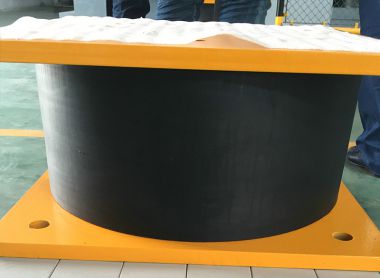
Base seismic isolation technology, whether using FPBs or LRBs, has been widely adopted in high-rise buildings and critical infrastructure. A well-known advantage of FPBs is that their stiffness center automatically aligns with the structure's center of mass, effectively minimizing torsional responses during earthquakes.
However, both conventional FPBs and standard LRBs share a critical limitation: they cannot resist tensile forces and offer negligible protection against wind-induced overturning. Consequently, they depend heavily on auxiliary devices – tie-down systems, uplift restraints, and separate wind-damping units – to remain stable under high-wind conditions. These add-ons increase structural rigidity and mitigate wind fatigue, but they also prolong design phases, extend construction schedules, and drive up labor and material costs. For tunnel portals and bridge piers in coastal or high-wind regions, this dependency becomes a major project bottleneck that undermines the overall efficiency of the seismic isolation strategy.
Our Patented Breakthrough – Integrated Wind-Resistant Friction Pendulum Bearing (Advanced Seismic Isolation + Wind Protection)
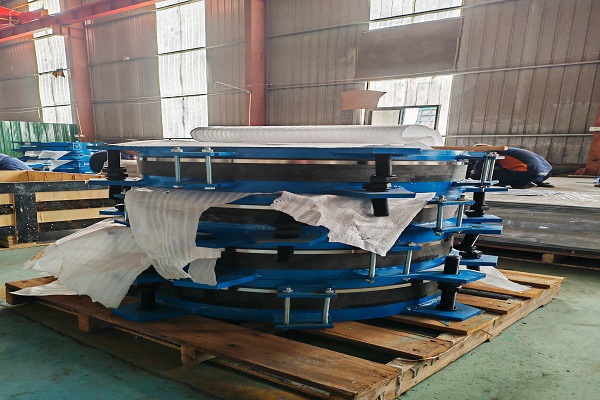
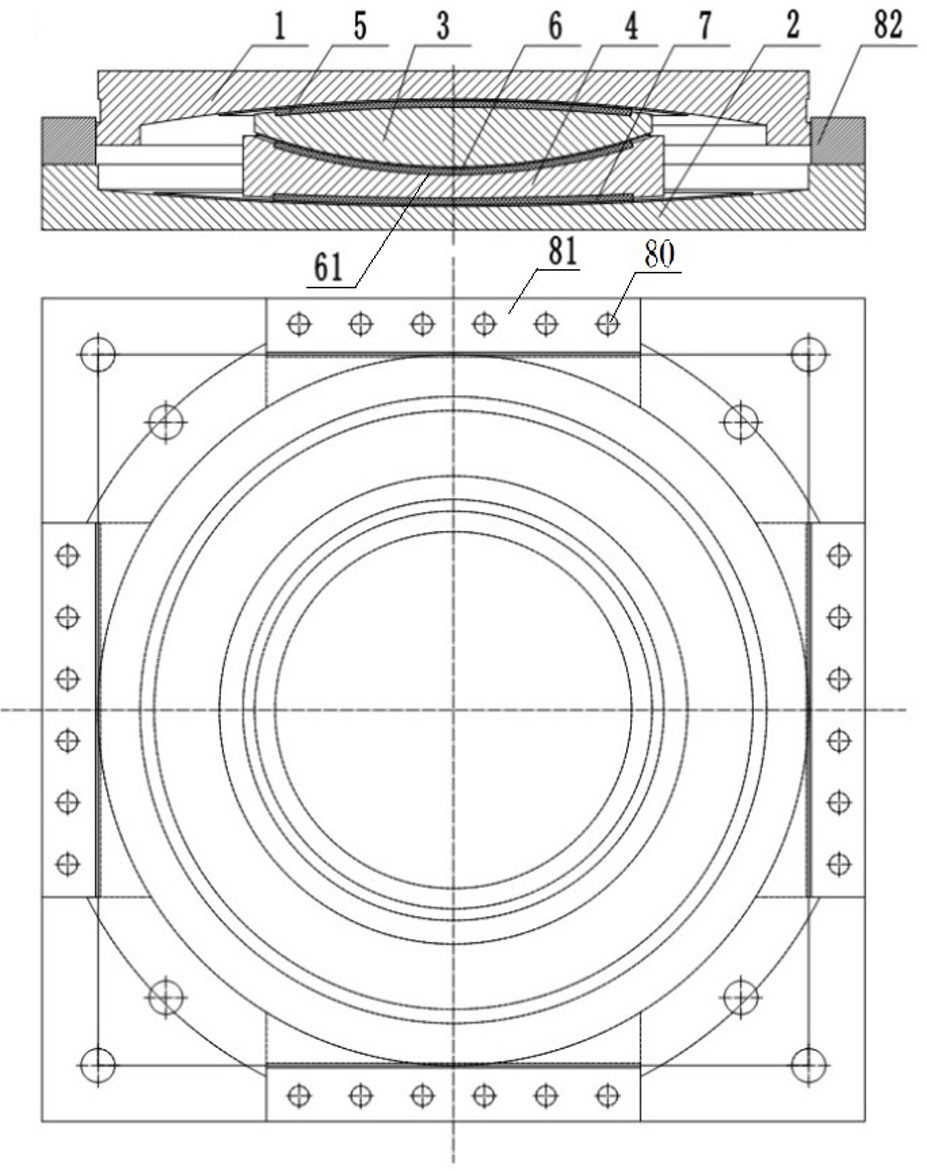
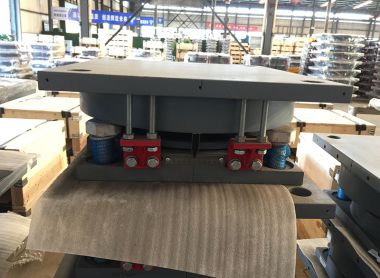
To eliminate these drawbacks, our company has developed and patented a next-generation wind-resistant friction pendulum bearing that seamlessly unifies full seismic isolation functionality with robust wind-load resistance – all within a single, compact assembly.
Dual-function synergy – the bearing delivers complete seismic protection (equivalent to premium FPBs) while simultaneously counteracting wind-induced uplift and lateral drift, without requiring bulky external devices.
Independent yet harmonious mechanisms – the seismic sliding surface and wind-restraint components operate in parallel, each performing its designated role without mutual interference.
Streamlined engineering workflow – by integrating both functions, we eliminate multiple separate devices, drastically simplifying design coordination, shortening on-site installation time, and reducing total labor expenses.
Proven cost-effectiveness – compared to traditional FPBs + separate wind systems, or LRBs with additional restraints, our solution lowers procurement, installation, and long-term maintenance costs while delivering superior overall structural resilience.
This patented design is especially advantageous for highway tunnel entrances, bridge substructures, and high-rise buildings situated in regions that face both frequent gale-force winds and moderate-to-high seismic activity.
To ensure you make an informed purchasing decision – whether comparing FPBs, LRBs, or hybrid systems – we recommend evaluating the following criteria:
Directional performance matching – assess whether an isotropic, asymmetric, or fully customized curvature profile best fits your structural geometry.
Material durability and friction stability – verify long-term wear characteristics and consistent coefficient of friction under design loads.
Wind and uplift resistance – confirm whether the bearing can handle local wind conditions independently, reducing dependence on expensive supplementary devices.
Installation efficiency – prioritize integrated designs that minimize on-site assembly complexity and accelerate construction progress.
Full lifecycle cost – look beyond the initial unit price; consider maintenance, inspection intervals, and potential replacement costs over the structure's service life.
Our patented wind-resistant FPB excels across all these dimensions. We provide tailored engineering support, comprehensive technical documentation, and a responsive global supply chain to meet your specific project requirements.
Upgrade your structural safety and project economics today – choose the friction pendulum bearing that redefines seismic isolation by integrating wind resistance, simplifying installation, and lowering total ownership costs.
For technical datasheets, project case studies, or a customized quotation, please reach out to our engineering team. We are committed to helping you build safer, smarter, and more resilient infrastructure – one bearing at a time.