Rubber pad bearings, technically known as elastomeric bearings, are fundamental components in modern civil engineering. Serving as the critical interface between a structure (like a bridge deck or building column) and its supports, they perform three vital functions: carrying vertical loads, accommodating horizontal movements, and allowing rotations. This guide delves deep into their design, applications, and selection criteria to inform engineers, specifiers, and procurement professionals.
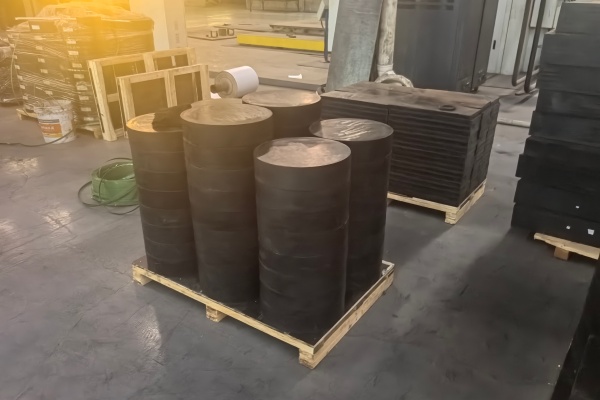
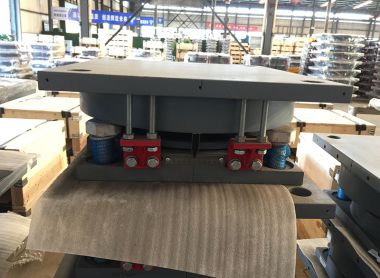
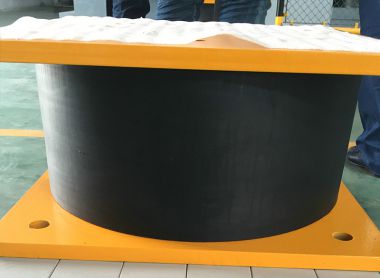
Unlike simple rubber blocks, high-performance elastomeric bearings are engineered composites. Their functionality stems from a layered structure:
Elastomer Layers: Typically made from natural rubber (NR) or chloroprene rubber (CR/Neoprene) for their excellent resilience, durability, and weather resistance.
Steel Laminates: Thin steel plates are vulcanized-bonded between rubber layers. These plates:
Restrict lateral bulging of the rubber, dramatically increasing vertical stiffness and load capacity.
Allow the bearing to flex horizontally for shear movements.
External Plates: Top and bottom plates, sometimes with bolt holes or shear keys, facilitate connection to the structure.
This reinforced elastomeric design creates a component that is vertically stiff but horizontally flexible—an ideal combination for handling dead loads, live loads, and environmental movements simultaneously.
Why are rubber pad bearings the go-to choice for countless structures worldwide?
Low Maintenance & Durability: Require no lubrication or regular mechanical adjustment. High-quality compounds resist ozone, weathering, and aging.
Cost-Effectiveness: Lower initial cost and minimal lifetime cost compared to mechanical or PTFE sliding bearings.
Vibration Damping & Noise Reduction: Effectively absorb and isolate vibrations from traffic and machinery, enhancing comfort and structural longevity.
Simplified Installation: Lightweight and easy to position compared to complex multi-part bearings.
Inherent Movement Accommodation: Naturally accommodate thermal expansion/contraction, creep, and shrinkage through shear deformation.
·
A key mark of an authoritative guide is helping users make informed comparisons. Here’s how elastomeric bearings stack up:
Feature | Elastomeric (Rubber Pad) Bearings | Pot Bearings | Spherical Bearings | PTFE Sliding Bearings |
Movement Type | Shear deformation | Multi-directional rotation & translation | Primarily rotation | Sliding translation |
Load Capacity | Moderate to High | Very High | Extremely High | High |
Maintenance | Very Low | Moderate (seals, fluid) | Moderate | Low (surface wear) |
Cost | Lowest | High | High | Moderate |
Best For | Small to medium spans, all movements | Large rotations, high loads | Very large rotations | Large translational movements |
Conclusion: For bridges with moderate movements and rotations, rubber pad bearings offer the most economical and maintenance-free solution.

Mentioning specific standards builds immense trust with professional audiences. Your bearings should be designed and tested per:
AASHTO LRFD Bridge Design Specifications (U.S. Market)
EN 1337-3: European Standard for Elastomeric Bearings (EU & Global Market)
ISO 22762: Seismic isolators (if applicable)
Regional national standards (e.g., BS, JIS)
Key specification parameters include:
Shore Hardness (e.g., 50 ±5 IRHD)
Compressive Stress limits (e.g., 10-15 MPa under service loads)
Shear Strain capacity (e.g., up to 100% for seismic events)
Low-Temperature Performance (e.g., tested at -40°C)
·
Highway & Railway Bridges: The most common application, for deck support and movement joints.
Building Seismic Isolation: As part of base isolation systems to protect structures during earthquakes.
Industrial Platforms & Equipment Bases: To damp vibrations and isolate machinery.
Prefabricated Structures: For easy alignment and load distribution in modular construction.
·
Selection is more than just size. Consider this checklist:
Design Loads: Determine permanent (dead) and variable (live) loads.
Required Movements: Calculate anticipated thermal movement, creep, and seismic displacement.
Rotation Requirements: Assess end rotations from deflections.
Environmental Conditions: Consider temperature extremes, ozone exposure, and potential contamination.
Regulatory Compliance: Identify governing design codes (AASHTO, EN, etc.).
Pro Tip: Always consult with an experienced bearing manufacturer during the design phase. They can optimize the bearing design (layer thickness, laminate count) for efficiency and cost.
Q: What is the typical lifespan of a rubber pad bearing?
A: A properly specified and installed bearing can last the entire design life of the structure (often 50+ years) with no major maintenance.
Q: Can they be used in seismic zones?
A: Absolutely. Special seismic isolators with high damping properties or lead-rubber bearings are specifically designed for this purpose, offering energy dissipation during earthquakes.
Q: How are they installed and replaced?
A: Installation is straightforward—placement on prepared, level surfaces. Replacement, though rare, requires temporary jacking of the structure to relieve load, which is a planned engineering operation.
Choosing the correct elastomeric bearing is crucial for safety, performance, and cost. Our engineering team specializes in designing and supplying custom rubber pad bearings that meet AASHTO, EN, and project-specific standards.
Contact us today for:
Free technical consultation and bearing design review
Detailed product specifications and CAD drawings
Competitive quotations for your project quantities
Let us help you build a more durable and efficient structure.