On October 9, 2026, a magnitude 7.6 earthquake struck the Upper Pitalosa area in southern Panama, with a focal depth of only 10 kilometers. The next day, a magnitude 5.0 earthquake struck again on the Azuero Peninsula in central Panama. The disaster damaged more than 400 buildings, including 142 residential buildings, 20 medical facilities, and 9 bridges. Panamanian President Mulino declared a state of “major disaster.”
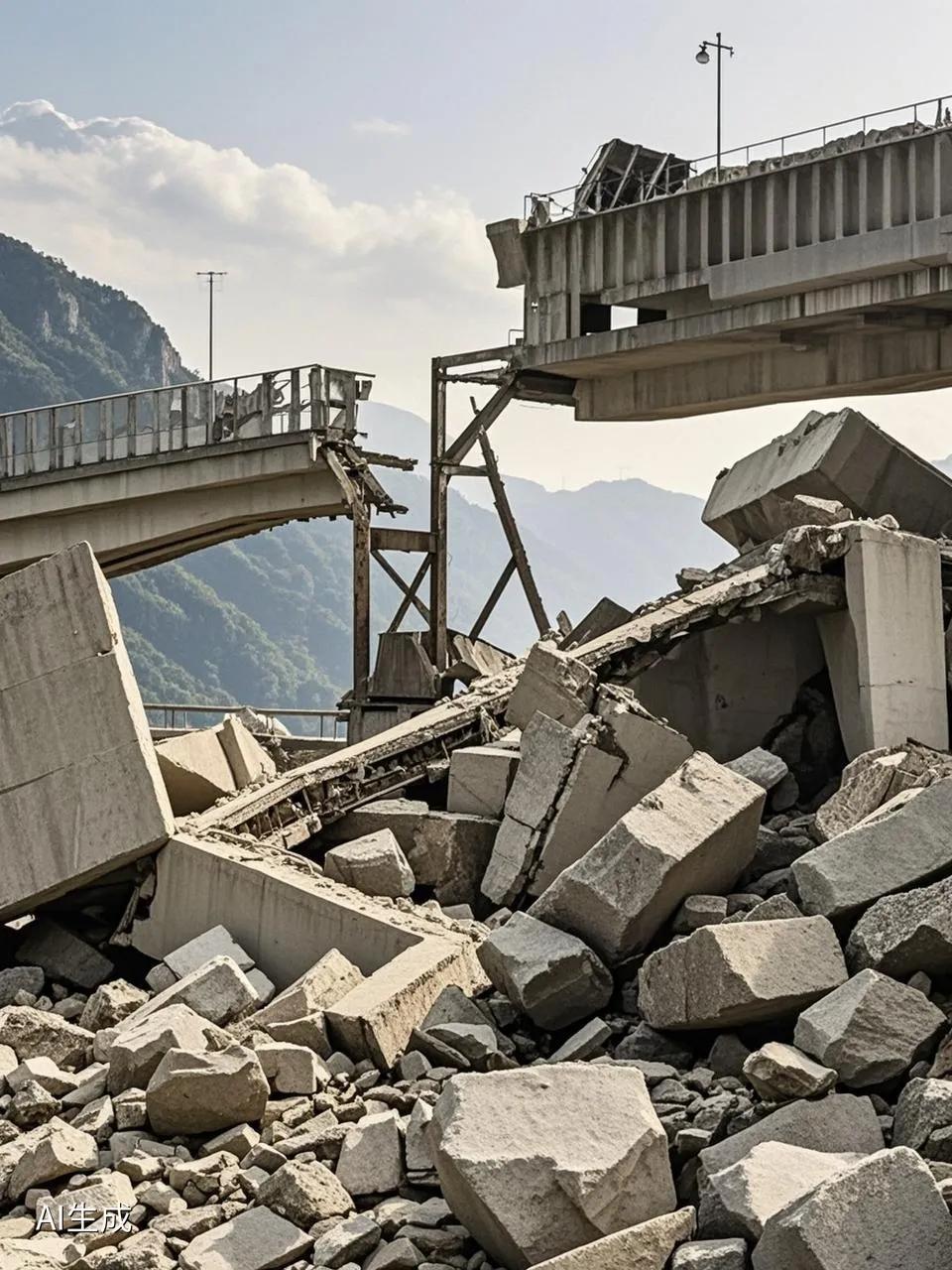
More alarmingly, the Centennial Bridge (Puente Centenario) over the Panama Canal was urgently closed after the earthquake for structural inspection. Once this highway bridge across the Canal is interrupted, it will directly affect global trade routes. During the earthquake, images of the bridge deck shaking violently spread around the world, prompting everyone concerned about infrastructure safety to ask: If the shaking had been stronger, what would have happened?
The answer points to a technology proven by the global engineering community—the LRB lead rubber bearing seismic isolation system.
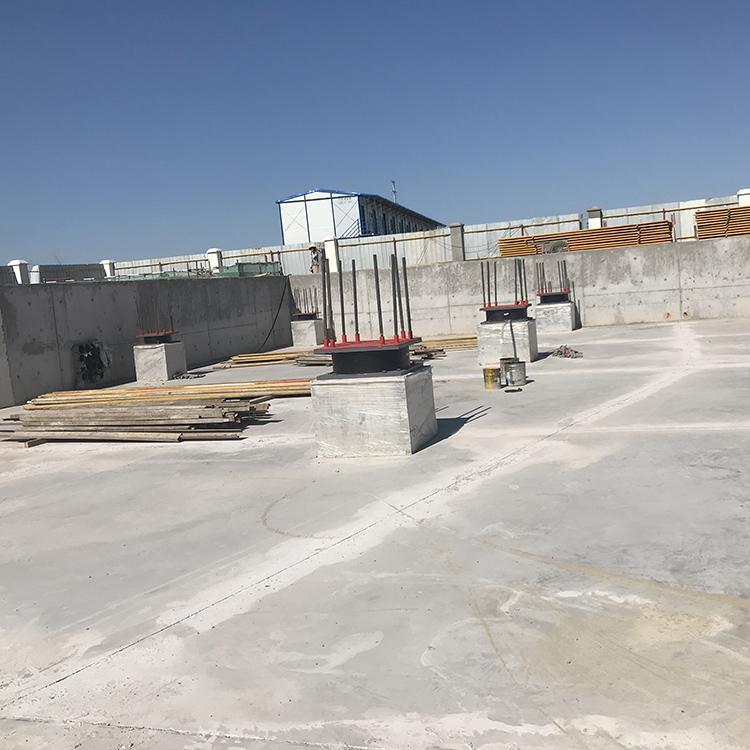
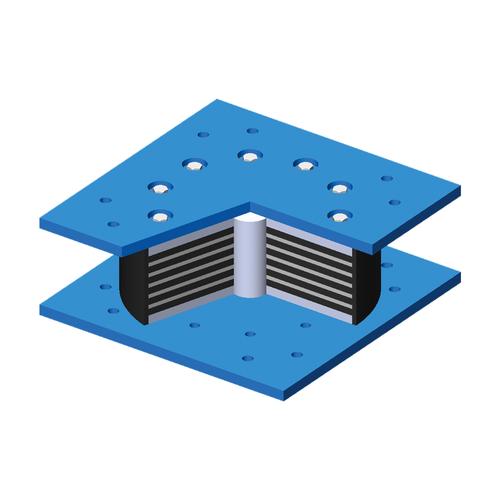
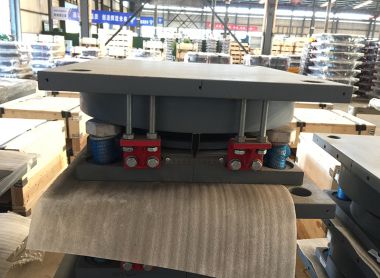
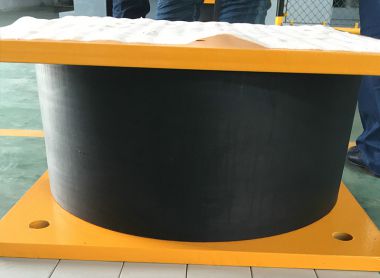
LRB (Lead Rubber Bearing) is an elastomeric seismic isolation bearing that integrates isolation and energy dissipation into a single device. Its core structure consists of alternating layers of natural rubber and steel plates, with a lead core inserted in the center. The two work together.
Its working principle can be summarized in three steps:
Step 1: Period elongation. During an earthquake, LRB uses the horizontal flexible deformation of the rubber layers to significantly extend the natural period of the bridge structure, separating the structure’s natural period from the dominant period of the earthquake and fundamentally avoiding resonance.
Step 2: Lead core energy dissipation. When horizontal deformation exceeds the yield displacement of the lead core, the lead enters a plastic state and converts seismic kinetic energy into heat through hysteretic deformation. Studies show that the equivalent damping ratio of LRB can reach about 28%, far higher than that of ordinary rubber bearings.
Step 3: Force distribution. The seismic isolation system distributes the lateral seismic forces to as many substructures as possible, preventing a single component from bearing excessive shear.
This technology has hard data support. A comparative study of bridge seismic isolation systems found that, compared with ordinary laminated rubber bearings, LRB can reduce pier base shear by 26.4%, bridge acceleration by 42.3%, and track stress by 15.9%. In another actual engineering case, after replacing traditional pot bearings with LRB, the bridge structure period was extended from 0.76 seconds to 1.67 seconds, and the lateral force was reduced to about one-fifth of the original design.
The performance of seismic isolation devices cannot remain at the level of theoretical calculation. The European standard EN15129 is a globally recognized authoritative specification for the design and testing of seismic isolation devices. It was developed by the European Committee for Standardization in 2009 and covers material properties, manufacturing requirements, and testing standards for elastomeric bearings and sliding isolators.
For LRB elastomeric bearings, EN15129 requires two major categories of tests:
Type tests include vertical compression stiffness tests, tests on the relationship between horizontal characteristics and rubber shear strain, horizontal displacement capacity tests, and others. For each type and size, at least two specimens must be tested. Acceptance criteria require that the effective stiffness deviation of a single specimen be within ±20% of the design value, and the energy dissipation capacity must not be less than 75% of the design value.
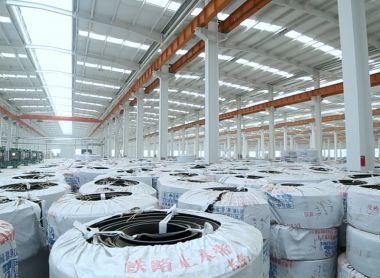
Factory production control tests are conducted by sampling production batches. Elastomeric isolators must be sampled at a rate of 20%. This strict quality control system ensures that every LRB leaving the factory can perform as designed in a real earthquake.
Panama is not unaware of seismic risk. The new Panama Canal bridge already adopted the seismic isolation concept in its design, with a design basis earthquake return period of 2,475 years and a bedrock peak acceleration of 0.57g. The fourth bridge on the Atlantic side of the Canal (Atlantic Bridge) fully adopted seismic isolation design, with a bearing displacement demand of up to ±1,025 mm.
But the problem is that many existing bridges in Panama—especially small and medium-span bridges connecting towns—still use traditional non-isolation bearings. In the 2026 earthquake, multiple bridges in Coclé and Los Santos provinces were damaged, and some communities were isolated because of bridge damage. This directly reflects the insufficient seismic capacity of existing bridges.
The need to promote LRB is self-evident. From an economic perspective, the cost of repairing or replacing damaged bridges is far higher than the investment in installing LRB during new construction or retrofit. From a functional perspective, bridges are lifeline channels for emergency rescue services after an earthquake—once interrupted, disaster areas become isolated, and the losses from secondary disasters multiply. From a technical perspective, LRB installation and inspection are relatively convenient, requiring no major modification of the bridge’s main structure, making it an ideal solution for seismic retrofit of existing bridges.
The Panama earthquake reminds us: earthquakes do not wait for infrastructure to be ready. LRB seismic isolation technology has been verified through decades of theoretical validation, experimental testing, and engineering practice. Its performance indicators are clear, its standards system is complete, and its application cases are abundant. For countries and regions located in seismically active zones, incorporating LRB into bridge seismic design standards is not an “option” but a “must” to protect the safety of transportation lifelines.
Bridges connect not only two shores, but also the passage of survival and hope after an earthquake.