Home < News < Uganda Ministry of Works Delegation Completes Factory Acceptance of Rubber Bridge Bearings & Expansion Joints
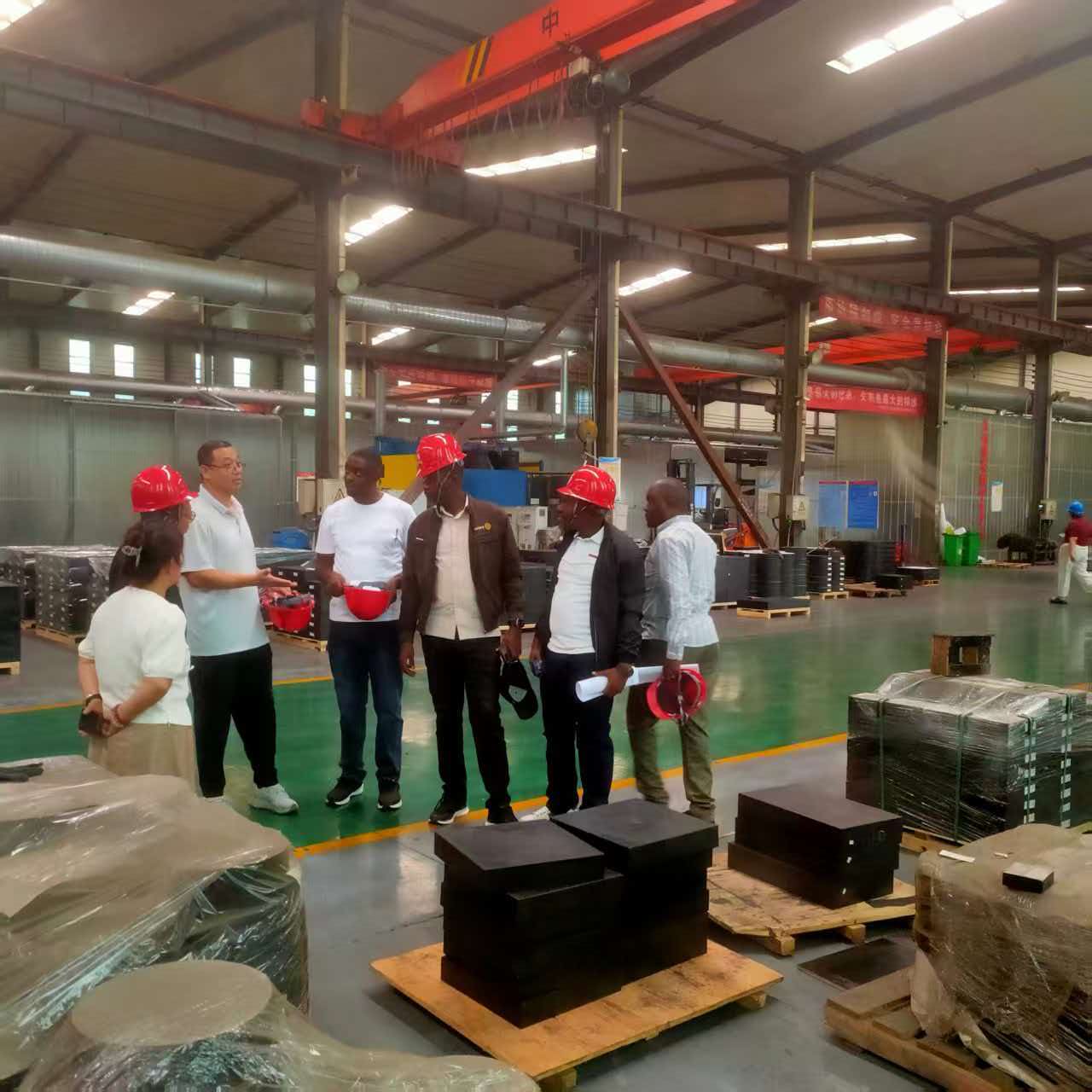
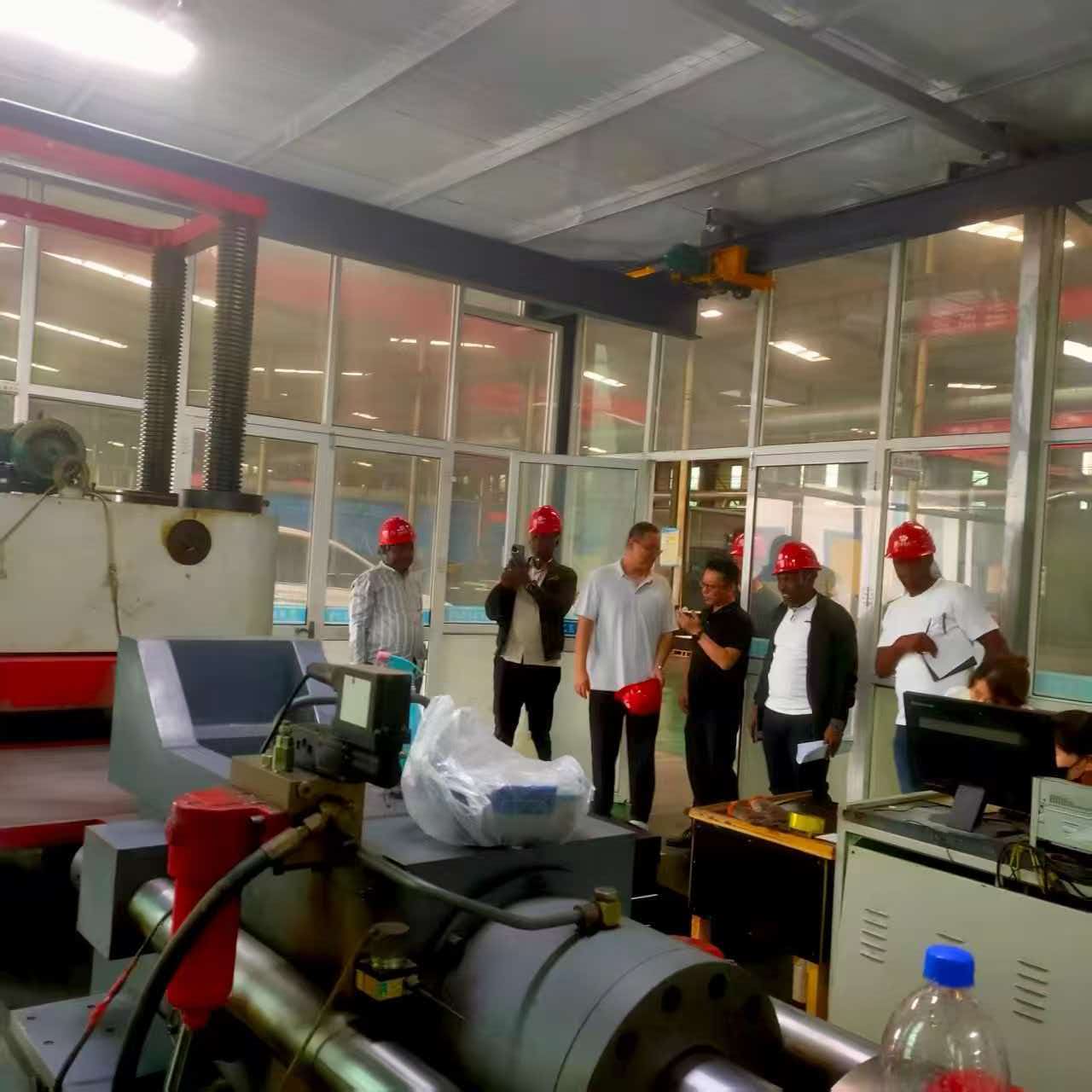
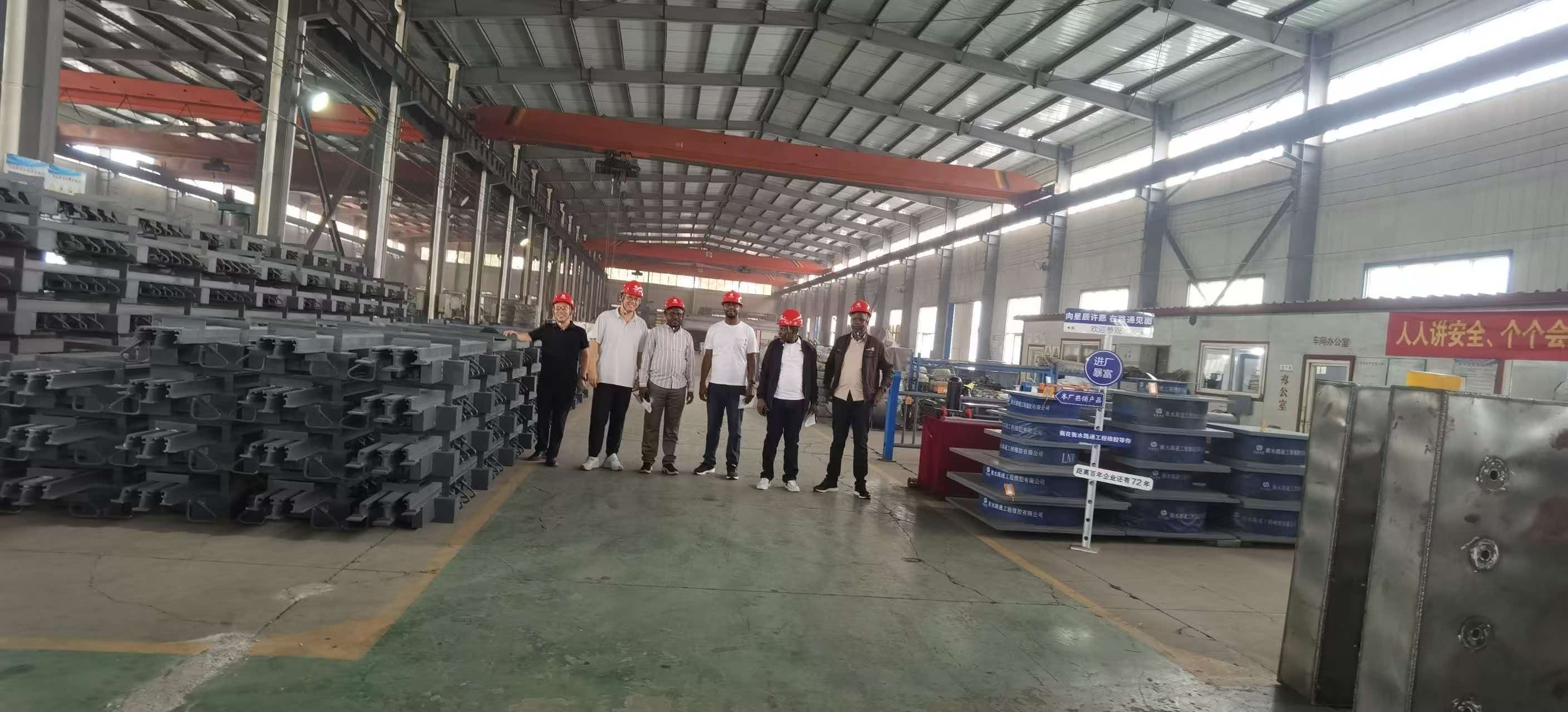
In August, a delegation from the Uganda Ministry of Works and Transport, accompanied by representatives of the project client, visited the manufacturing facility to conduct a comprehensive factory acceptance inspection of rubber bridge bearing pads and bridge expansion joints destined for road and bridge projects in Uganda. The visit covered production line walkthroughs, dimensional and material verification, and a technical review session, culminating in the formal acceptance of the inspected batches.
Uganda‘s bridge infrastructure is in a phase of active renewal and expansion. The Ministry of Works and Transport is currently implementing the new 245-metre cable-supported Karuma Bridge across the Victoria Nile, funded through a $24 million JICA grant and constructed by Zenitaka Corporation, with works underway since October 2026. The new structure is designed to replace the ageing 1963 crossing and will feature a 11.5-metre width with a seven-metre carriageway, addressing longstanding safety constraints on the Northern Corridor. Alongside Karuma, bridge reconstruction and rehabilitation activities—including works on the Katonga Bridge and the Nchwera Bridge—are progressing across the network, sustaining demand for compliant, durable bridge components. For bridge bearings and expansion joints entering this pipeline, demonstrated conformity to internationally recognised specifications is a precondition for acceptance.--
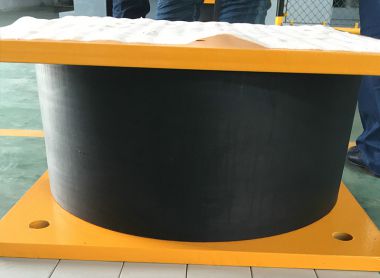
The rubber bridge bearing pads under inspection are steel-reinforced laminated elastomeric bearings, fabricated from multi-layer rubber sheets bonded to steel shims through high-temperature vulcanisation. They are designed to transmit vertical loads from the superstructure to the substructure while accommodating longitudinal and rotational movements, and to isolate vibration and shock. The elastomer compound is selected and tested against AASHTO M251 requirements, the governing specification for plain and laminated elastomeric bridge bearings, with hardness verification per ASTM D2240 and shear modulus control within the specified tolerance band. Internal steel laminates meet ASTM A1011 Grade 36 requirements, and bearings are laminated in controlled elastomer layer thicknesses to maintain stability under service rotations.-
-14-
The expansion joints supplied for the project are modular and finger-type systems, selected to accommodate the movement ranges anticipated for the bridge decks in question. Modular joints typically cover movements from approximately 80 mm to 600 mm, while finger joints serve movement ranges from around 60 mm to 500 mm depending on configuration; both types are designed with replaceable components to support long-term maintenance. Critically, the movement restriction imposed by each bearing must remain compatible with the movement allowance of the adjacent expansion joint, and both must be designed consistent with the overall structural load and deformation behaviour. The joint systems reviewed during the visit were checked against this compatibility requirement alongside their own material and dimensional specifications.-
-
The factory acceptance test (FAT) for bridge bearings is a structured verification stage distinct from routine production quality control. It confirms that the finished components can handle design loads, accommodate shear and rotational demands, and satisfy friction and movement limits before shipment. For elastomeric bearings in particular, visual inspection alone is insufficient; certified test reports and witnessed FAT for critical mechanical properties—including compressive elastic modulus, shear behaviour and hardness—form the evidentiary basis for acceptance.-
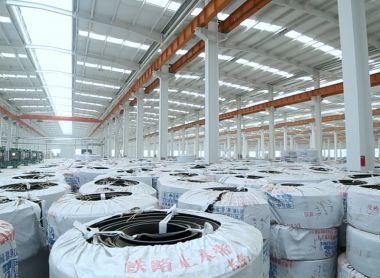
During the August visit, the delegation reviewed the production workflow from raw material batching through lamination, vulcanisation and finishing, and examined the in-process and final inspection records maintained for the inspected batches. The manufacturer‘s quality protocol includes FAI, type approval testing, IPQC, FQC and OQC, with 100% inspection before shipment and batch-level traceability. Dimensional checks on bearing plan dimensions, elastomer layer thickness and steel shim placement were carried out against the approved drawings, and the corresponding material test certificates for the elastomer compound and steel laminates were reviewed. For the expansion joints, the delegation inspected the modular assembly, finger plate geometry and sealing arrangements, and reviewed the movement capacity documentation against the project’s deck movement calculations.-1
The technical review session, held in the factory conference room, covered the test data package, packing and marking requirements, and the sequence for pre-shipment documentation. The delegation also discussed the interface between bearing and expansion joint movement allowances to confirm that the two component families would perform as a coordinated system on the bridge.-
For infrastructure programmes operating under Ministry-level oversight, the value of a factory acceptance inspection lies in closing the compliance gap before the components leave the manufacturing floor. Uganda‘s bridge projects are procuring bearings and expansion joints that must perform under heavy commercial traffic and regional trade loads, and the consequences of premature component failure—deck distress, unplanned closures and rehabilitation cost—are significant. A witnessed FAT against AASHTO M251 and project-specific movement criteria provides the Ministry and its client with documented evidence that the delivered components match the design intent.-
The August acceptance also reflects a procurement pattern in which East African bridge owners and their contractors engage directly with manufacturers at the factory stage. For suppliers serving Uganda and the wider East African market, the ability to host Ministry delegations, present live test data and demonstrate batch-level traceability is increasingly part of the qualification process, not an optional add-on.
The Uganda Ministry of Works and Transport delegation‘s factory acceptance of rubber bridge bearing pads and expansion joints confirms that the inspected batches meet the specified technical and quality requirements. As Uganda’s bridge construction and rehabilitation programme advances—anchored by the new Karuma Bridge and supported by a pipeline of crossing upgrades—AASHTO M251-compliant elastomeric bearings and movement-compatible expansion joints will remain essential inputs. Manufacturers with documented FAT capability, full traceability and export experience to East Africa are positioned to support this demand.